
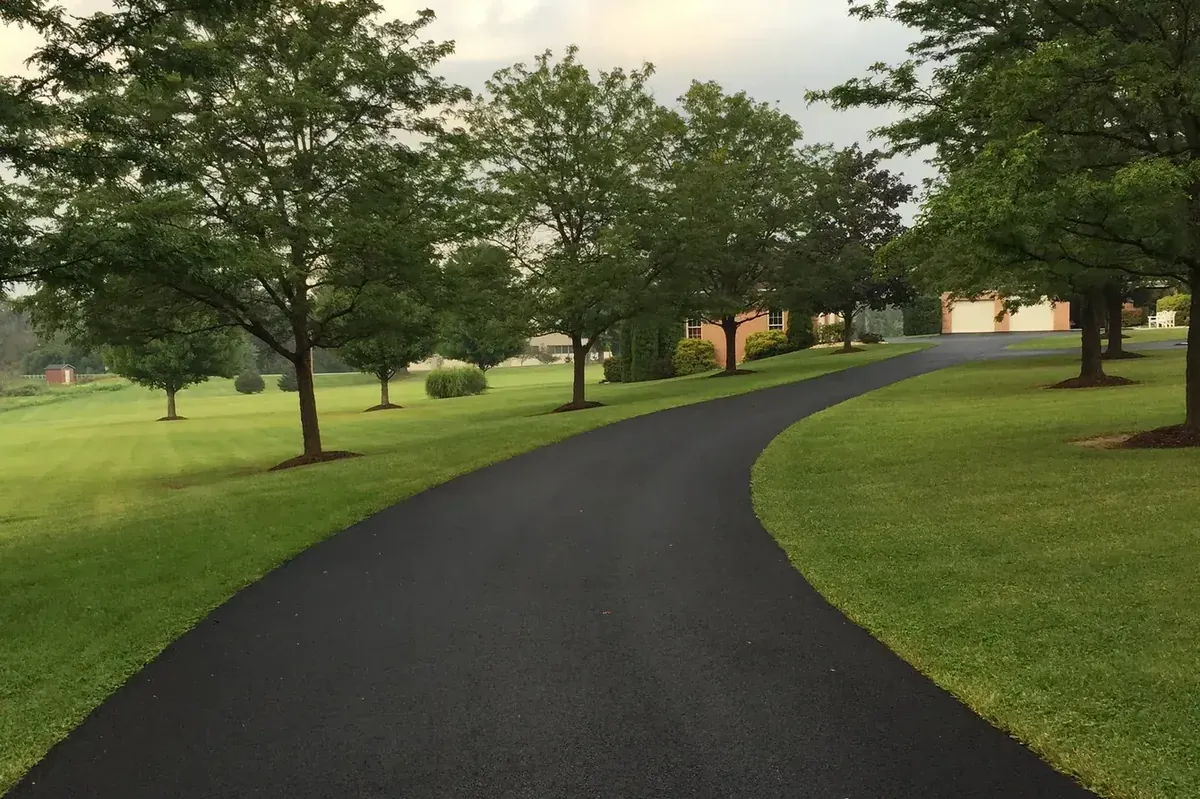
If you’re reading this in late October, the honest answer is that sealcoating season in Latrobe is close to over, but your driveway still has options. Sealcoat needs warm, dry days to cure, and those are getting scarce in Westmoreland County. Crack repair is more forgiving, and it happens to be the job that matters most before winter, because the damage a Pennsylvania winter does to asphalt starts with water sitting in open cracks.
Why temperature decides everything
Sealcoat is a liquid coating that has to dry and cure on the surface of your blacktop. If it goes down when the air or the pavement is too cold, it can stay soft, fail to bond and wear off in a season, which means you paid for a coat that didn’t do its job.
The industry rule is fairly consistent. Sealcoat manufacturers generally call for at least 50 degrees and rising for a full 24 hours, with no rain expected in that window, and many go further and want the pavement itself at 60 degrees or warmer.
In late October around Latrobe, Greensburg and Ligonier, that combination is hit or miss. A sunny afternoon in the 60s can be followed by a night near freezing, and a day that starts in the 40s may never warm the pavement enough. Frost and heavy morning dew add moisture that sealer doesn’t tolerate well either. The National Weather Service forecast for the Pittsburgh area is the easiest way to see whether a stretch of warm, dry days is coming.
Crack repair has a little more room
Cracks are a different story. Hot-poured crack sealant, the kind applied from a heated kettle, works at lower temperatures than sealcoat. Highway specifications commonly set the limit at about 40 degrees for both the air and the pavement, and rule out foggy or rainy days. Cold-pour fillers from the hardware store generally want the same 50 degrees and rising as sealcoat, so a weekend DIY job is under the same clock as a sealcoating job.
That extra margin is useful, because cracks are where winter does its damage. Water gets into an open crack, freezes, expands and pushes the asphalt apart. After enough freeze-thaw cycles, a crack you could ignore in October can become a broken edge or a pothole by March. Sealing cracks before the ground freezes is one of the most cost-effective things you can do for a blacktop driveway.
What to do if you’re past the window
If the forecast doesn’t give you the warm, dry stretch sealcoat needs, don’t force it. A driveway that goes into winter without fresh sealcoat isn’t in trouble, as long as the cracks are taken care of. Here’s a sensible plan for the next few weeks:
- Walk the driveway now. Look for cracks wider than a pencil, cracks along the edges, spots where water pools, and any soft or sunken areas. Take a few photos so you can compare in spring.
- Get cracks sealed while temperatures allow. This is the step that can’t wait for spring.
- Clear leaves and debris. Wet leaves left on blacktop all winter hold moisture against the surface and hide cracks from view.
- Plan sealcoating for spring. Once the weather holds at 50 degrees and up, usually in late spring, a fresh coat protects the surface through the next summer’s sun and the following winter.
How Cooper’s handles fall work
Cooper’s Blacktop Paving has been working on driveways in Latrobe and across Westmoreland County since 1965, and owner Mike Cooper supervises every job. When the weather is borderline, we’d rather tell you to wait than put sealer down on a day it won’t cure. [Cooper’s typically schedules sealcoating through about (month) depending on weather; confirm with Mike.]
If your driveway needs more than crack repair, such as wide areas of broken pavement or a failed base, fall is also a good time to have it looked at. You’ll know what you’re dealing with before winter, and you can get on the schedule for spring paving before the busy season starts. Our earlier post on whether to repair or replace an asphalt driveway explains what we look for.
The short version
- Sealcoat needs about 50 degrees and rising for a full day, with no rain. In late October that window is closing fast.
- Hot-poured crack sealant can go down in cooler weather, around 40 degrees, and sealing cracks matters more than sealcoating before winter.
- If you miss the sealcoating window, seal the cracks now and plan the coating for spring.
Not sure what your driveway needs before the snow? Request a free estimate and Cooper’s will take a look. You can also see the full list of our driveway and seal coating services, or browse recent projects around Latrobe and Westmoreland County.